private _zoomState = { len: 32 };
tween(this._zoomState)
.to(0.1, { len: this.lenMin }, { easing: easing.sineInOut })
.delay(100)
.to(1.2, { len: this.lenMax }, { easing: easing.sineInOut })
.start();

private _zoomState = { len: 32 };
tween(this._zoomState)
.to(0.1, { len: this.lenMin }, { easing: easing.sineInOut })
.delay(100)
.to(1.2, { len: this.lenMax }, { easing: easing.sineInOut })
.start();
不生效的表现行为是?
to(1.2) 被立即执行了?
to(1.2) 永远不被执行?
delay(100) 表示延时 100 秒,确定是这么久么?
to(1.2) 被立即执行了
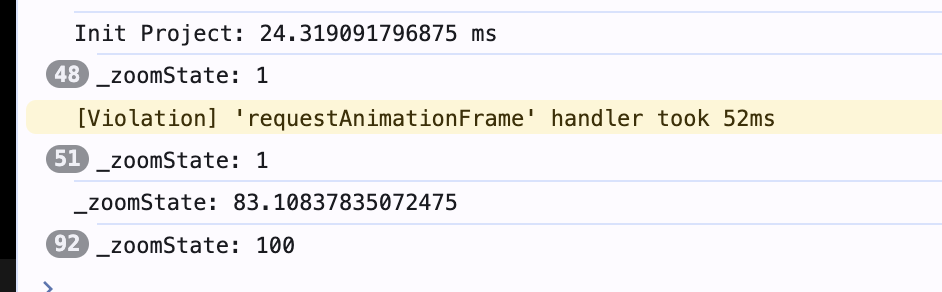
你是如何判断 to(1.2) 被立即执行的?
我按照你的测试例,验证了一下,3.8.3 上是正常的:
我每秒打印一次 _zoomState.len,在第 100 秒的时候 len 被更新
测试代码:
import { _decorator, Component, Node, tween, easing } from 'cc';
const { ccclass, property } = _decorator;

@ccclass('NewComponent')
export class NewComponent extends Component {
    private _zoomState = { len: 32 };
    private lenMin = 1;
    private lenMax = 100;

    start() {
        tween(this._zoomState)
        .to(0.1, { len: this.lenMin }, { easing: easing.sineInOut })
        .delay(100)
        .to(1.2, { len: this.lenMax }, { easing: easing.sineInOut })
        .start();

        this.schedule(()=>{
            console.log(`_zoomState: ${this._zoomState.len}`);
        }, 1);
    }


}
一场误会了